
By Shannon Lukens for Steamboat Radio/Blizzard Broadcasting.
Update Saturday morning:
The names have been released by the Routt County Coroner of those who died in the plane crash on Emerald Mountain early Friday morning. All four are from Tennessee. They are 46-year-old Aaron Stokes, and his son, 21-year-old Jackson Stokes. Their nephew and cousin, 21-year-old Colin Stokes also died. The fourth person who died on the plane is 37-year-old Austin Huskey.
This is according to Routt County Coroner Mitch Locke.
An obituary posted on Ever Loved says Aaron Stokes is from Franklin, Tennessee.
“Aaron Stokes was widely recognized as the founder of Shop Fix Academy, an organization dedicated to empowering independent auto repair shop owners. A self-made multi-millionaire with 25 years of entrepreneurial experience, Aaron’s influence extended significantly within the industry. He successfully owned and operated five auto repair shops and hosted the popular radio show “Fixin’ Cars with Aaron Stokes.”
Our condolences to the family.

Aaron Stokes Plane Crash Obituary


Screenshots from social media in Tennessee
Friday evening: Names of the deceased will be released Saturday morning from the Routt County Coroner.
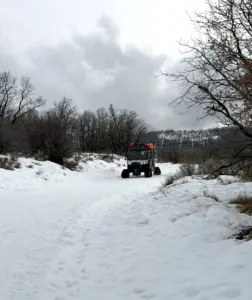
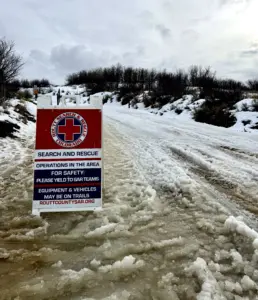
Photos courtesy Karina Lukens.
UPDATE AT 9:55 A.M. FAA Statement — This information is preliminary and subject to change.
An Epic E1000 crashed near Steamboat Springs, Colorado, around 12:20 a.m. local time on Friday, Feb. 13. Four people were on board. The FAA and National Transportation Safety Board (NTSB) will investigate. The NTSB will lead the investigation and provide any updates.
- Contact local authorities for information about those on board.
- View the FAA’s preliminary accident/incident report here.
- The aircraft registration number (N-number) is N98FK. You can search it here.
ORIGINAL POST
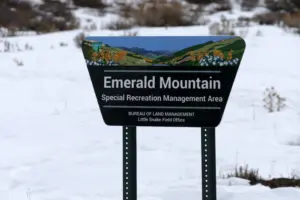
Four people died in a plane crash on the back of Emerald Mountain early Friday morning. Routt County Sheriff Doug Scherar confirms it was on the backside of Emerald. He says all bodies have been recovered and the Routt County Coroner will work on notifying the families today.
Sheriff Scherar says the crash happened in a very remote area of Emerald, after midnight. There is a closure in that area right now, that is clearly marked by yellow tape, so please do not go there.
Sheriff Scherar also says Routt County Search and Rescue was instrumental in getting people to the crash site, including Routt County Sheriff’s officers, Steamboat Springs Police, and the Routt County Coroner.
Routt County Search and Rescue got the call at 12:40 a.m. and were en route at 1 a.m. They had eight people go, using snowmobiles, track vehicles, and on foot.
Investigators with the FAA and National Transportation Safety Board are on their way to the crash and are expected to be here this afternoon.
Here is more on a press release from NTSB this morning:
NTSB is investigating the crash of an Epic Aircraft E1000 on Feb. 13 near Steamboat Springs, Colorado. The preliminary information we have is the plane crashed into mountainous terrain under unknown circumstances.
An NTSB investigator is en route to the scene and is expected to arrive by this afternoon. Once on site, the investigator will begin the process of documenting the scene and examining the aircraft. The aircraft will then be recovered to a secure facility for further evaluation.
NTSB investigations involve three primary areas: the pilot, the aircraft and the operating environment. As part of this process, investigators will gather the following information and records:
- Flight track data
- Recordings of any air traffic control communications
- Aircraft maintenance records
- Weather forecasts and actual weather and lighting conditions around the time of the accident
- Pilot’s license, ratings and recency of flight experience
- 72-hour background of the pilot to determine if there were any issues that could have affected the pilot’s ability to safely operate the flight
- Witness statements
- Electronic devices that could contain information relevant to the investigation
- Any available surveillance video, including from doorbell cameras
Witnesses to the accident or those who have surveillance video or other information that could be relevant to the investigation are asked to contact the NTSB at witness@ntsb.gov.
During the on-scene phase of the investigative process, the NTSB does not determine or speculate about the cause of the accident.
The NTSB has no role in the release of the identities of accident victims and/or the extent and number of injuries nor does it release the identities of those injured or killed; that’s handled by local authorities.
A preliminary report will be available within 30 days; it can be accessed by searching our investigations database with the NTSB number CEN26FA115. It will also be posted on NTSB Newsroom Twitter .
The preliminary report will contain factual information gathered during the initial phase of the investigation. A probable cause of the crash along with any contributing factors will be detailed in the final report, which is expected in 12-24 months.